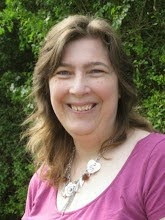
Dinah Jefferies - Author of The Tea Planter's Wife
I'm very pleased to have a guest post from Dinah Jefferies on my blog today, sharing some of her top writing tips. Her book, 'The Tea Planter's Wife' is out today.
Writing without Stabilisers
With
three books either published, or about to be published by Penguin, these are fourteen
of the things I’ve learnt about writing that I wish I'd known earlier. Some are
obvious, others less so. They may suit you, or they may not, but they work for
me.
Writing without stabilisers and
trusting your own instincts is the most vital thing. Waiting for someone else
to verify our work can hold us back as writers. I had to learn the importance
of trusting my own instincts and making my own decisions. It’s a skill that grows
with use, but if you rely on other people too much it can hinder your own progress.
Having said that, of course feedback can be useful. I always take on board what
my agent and publisher say, and I always have, but I don’t use an army of
readers because I find that too many opinions hamper me.
Get to know your audience and work out your
USP.
Who are you writing for and what do they want? My readers tend to be looking
for quality reads that captivate them or sweep them away to a life different
from their own. And that’s what I enjoy writing.
What is the real heart of your story?
Sometimes it’s only when the first draft is done that I can answer this, but
it’s an important question to ask and I always do. Sometimes I spend quite a
bit of time working out the answer, but it’s worth it because once you know the
heart of your story it gives you a clearer focus with which to write the second
draft.
Be prepared to get really busy & work
very hard. Everyone knows that. Right? And yet it came as
quite a shock when I found myself promoting one book, editing the next and
planning the one after that. Some days I feel as if I’m running to catch up.
Draft an outline of some kind even
if, like me, you aren’t a precise planner. I learnt this the hard way as I
recently had to cut 49,000 words from the manuscript of my fourth book because
the outline was too vague and I’d wandered way off track.
Get the first page right. Exciting,
attention grabbing, intriguing, or subtle, the first page has quite a job of
work to do, but now I write it quickly, and then go back and re-write once the
first draft is finished, because then I understand more about how the book
works. If you do that it’s easier to decide what your first scene really should
be and the most effective way to hook your reader. I think it’s helpful to get
across where the scene is happening and to whom, with enough sensory detail to
encourage a reader to read on, but not too much.
Don’t begin with back story.
Although it’s not unknown to find yourself bogged down by back story in a
novel, as a new author I’ve found it’s a good idea to keep it brief and slip it
in as I go along. Some writing teachers advise no back story in the first 50
pages, and though I wouldn’t go that far it’s worth bearing in mind. I have to
admit I enjoy novels that don’t rely on back story too soon.
Be prepared to be ruthless and keep
the plot moving. Make sure something is actually happening. It’s important not
to hang on to chapters, characters or sections that don’t add anything to the
book. I’ve found streamlining and cutting can be fun once you get over the
fear. (Those pesky 49,000 words AGAIN!) In any case I always check if the first
chapter or two are even necessary, or whether I was actually just finding my
way into the story.
Repetition I had
stock phrases I used without thinking. You probably do too. Seek them out and
weed them out. This is a never ending task.
Talking of dialogue. It’s
frequently recommended and I found it to be true. Reading your manuscript aloud
helps make each character sound distinctive, and if it doesn’t you soon see
where to make changes. In fact I read the whole book aloud. It’s amazing how
many glitches you find. Keep a glass of water at hand and some throat lozenges.
Tension. There’s no story
without tension but it can be subtle, elegant, or found semi-hidden in the
subtext. It doesn’t have to hit you over the head with a hammer, but you do
have to make sure it’s there and, if it’s compelling you to read on, all the
better.
Show not tell is the
single most obvious piece of advice but what does it really mean? It took me a
few stabs at it before I recognised the difference between reporting a scene
and showing it happening in front of your eyes. What you’re aiming for is to
fully engage your reader with what’s going on at the moment it happens.
Fully rounded Characters. Seems
obvious but getting a grip on their weaknesses as well as their strengths helps
to make them believable. Decide what the character really wants, explore their
inner and outer conflicts, and choose what or who is going to get in their way.
Most of all look for ways for your readers to empathise and care about what
happens to your characters.
Think about polishing the writing as a last
step not a first step. As with the first page I found there was little point polishing the writing too early as
much of it was liable to alter. In the early days I wasted time that way, but
now I get the story down and then work at it to improve character, dialogue,
setting and so on.
So that’s it. There
are other things I’ve learnt and more that I’m still learning – it’s an ongoing
process, but that’s what makes writing so much fun.
Dinah Jefferies was born
in Malaysia and moved to England at the age of nine. She has worked in
education, lived in a commune and exhibited work as an artist. Dinah's first
novel, The Separation, was published by Viking in 2013; The Tea
Planter's Wife is her second novel. It will be out September 3rd.
She is a contributor to the Guardian and other newspapers and lives in
Gloucestershire with her husband www.dinahjefferies.com @DinahJefferies